As a Theology professor I like to wonder about how the theologians that I admire were educated. First of all I’m simply curious about their lives; but second, I want to know how I can help educate my own students in the beneficial ways that the great heroes of the faith were educated. We are lucky enough to possess long reminiscences by great Christian writers concerning their schooling, from St. Gregory Nanzianzen to C.S. Lewis and others. Suffice it to say that the Christian outlook of these figures at times put them at odds with the pedagogy, curriculum, and whole philosophy of education that they encountered in their upbringing. But we can also see these figures discerning deep value in their education that their schoolfellows missed, precisely because of their sanctified vision of creation and human endeavor.
*
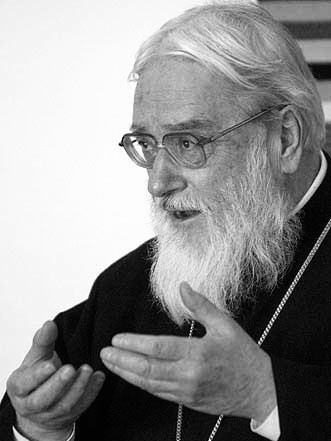
I was pleased to come across a new addition to the literature of educational reminiscence in the Reminiscencesand Recollections of Metropolitan Kallistos Ware, recently published by SVS Press. I was most struck by the Metropolitan’s discussion of his time as an undergraduate at Oxford University. Because of his capability in classical languages in secondary school, Ware had been accepted to Oxford on a classics scholarship, which meant that he was required to take a course of study which at the time was called “Greats.” As Ware explains, this involved study of not only ancient Greek and Latin classics (Homer, Plato, Cicero, Virgil, etc), but also more modern classics of literature and philosophy. I immediately recognized this as a similar curriculum to our Great Texts program at Saint Constantine College—except Metropolitan Kallistos was reading all the ancient classics in their original languages!
Ware explains that partway through his undergraduate study, as he deepened in his Christian faith and was more and more drawn to the Orthodox Church, he became convinced that he should stop studying Greats and re-enroll as as Theology student. After all, if he was called to pastoral ministry in the Church, why would he waste time studying something other than the Holy Scriptures and the Fathers?
However, when Ware expressed his wish to switch his course it study to theology, Oxford refused. He had, after all, only been accepted to Oxford due to his capability in classical languages. He must thus finish the course of study he had began. In retrospect, Ware explains that he is happy Oxford required him to stick with Greats:
“The classical background that I did, and especially the philosophy that I studied, formed the best possible preparation for my later academic work [in the Church Fathers]. So… I am glad that I was made to stick to classics. I particularly enjoyed the philosophy, particularly the study of Plato. I would wish to regard myself as a Christian Platonist.” (Reminiscences and Recollections, 31).
Ware was allowed, once he finished his Bachelor of Arts in Greats, to enroll in the Theology Bachelors program, which he pursued for another two years. Ware explains that the Theology curriculum at the time was focused on the Old and New Testaments, as well as Early Christian doctrine up through the Council of Chalcedon. Rather than highlighting a contrast between these two curricula—Greats and Theology—Metropolitan Kallistos stresses their unity: Greats was the “best possible preparation” for the study of the Scriptures and the Fathers. Of course, Ware is repeating a view that was put forth by St. Basil the Great: that the careful and discerning study of the pagan classics is a proper preparation for the greater and more perilous study of sacred doctrine.
Like any old scholar, Metropolitan Kallistos is also forthcoming about what he sees as a diminution of the study of Theology at Oxford: no longer, he explains, does Oxford’s Theology department require Theology students to study early Christian theology, and the focus on scripture has also lessened. We should return, he says, to a focus on the Old and New Testaments and the Church Fathers is we are to recover a more robust grounding in Christian Theology.
*
You never know what you are going to find in the personal reminiscences of great thinkers and writers you admire. Sometimes what you find is disappointing, off-putting, even disillusioning. I was blessed to find that in his words about education, Metropolitan Kallistos was affirming the very approach we take at Saint Constantine: the study of the Greats, the classics both ancient and modern, alongside the Scriptures and the Fathers
Leave a Reply